
When comparing quartz vs granite for Miami kitchens, think about how you cook, how much maintenance you want, and the look you want to see every day. Quartz is an engineered surface known for consistent designs and easy upkeep. Granite is natural stone, with one-of-a-kind movement and strong heat tolerance. Neither is automatically best for every home.
Quartz vs granite: the quick answer
- Choose quartz if you want a nonporous, low-maintenance countertop with a more consistent color or pattern.
- Choose granite if you prefer natural variation, want stronger tolerance for everyday heat, and are comfortable following the care instructions for your particular slab.
- For an outdoor kitchen or a counter in strong direct sun, confirm the product is rated for that exposure. Many engineered quartz products are intended for indoor use because sunlight can affect their resin and color.
For most indoor Miami kitchens, the local climate is a reason to think carefully about sunlight and daily cleanup—not a reason to assume one material will fail from humidity. Here is what to compare before choosing your slab.
Also considering quartzite? See our quartz vs quartzite vs granite comparison for Florida kitchens.
What is the difference between quartz and granite?
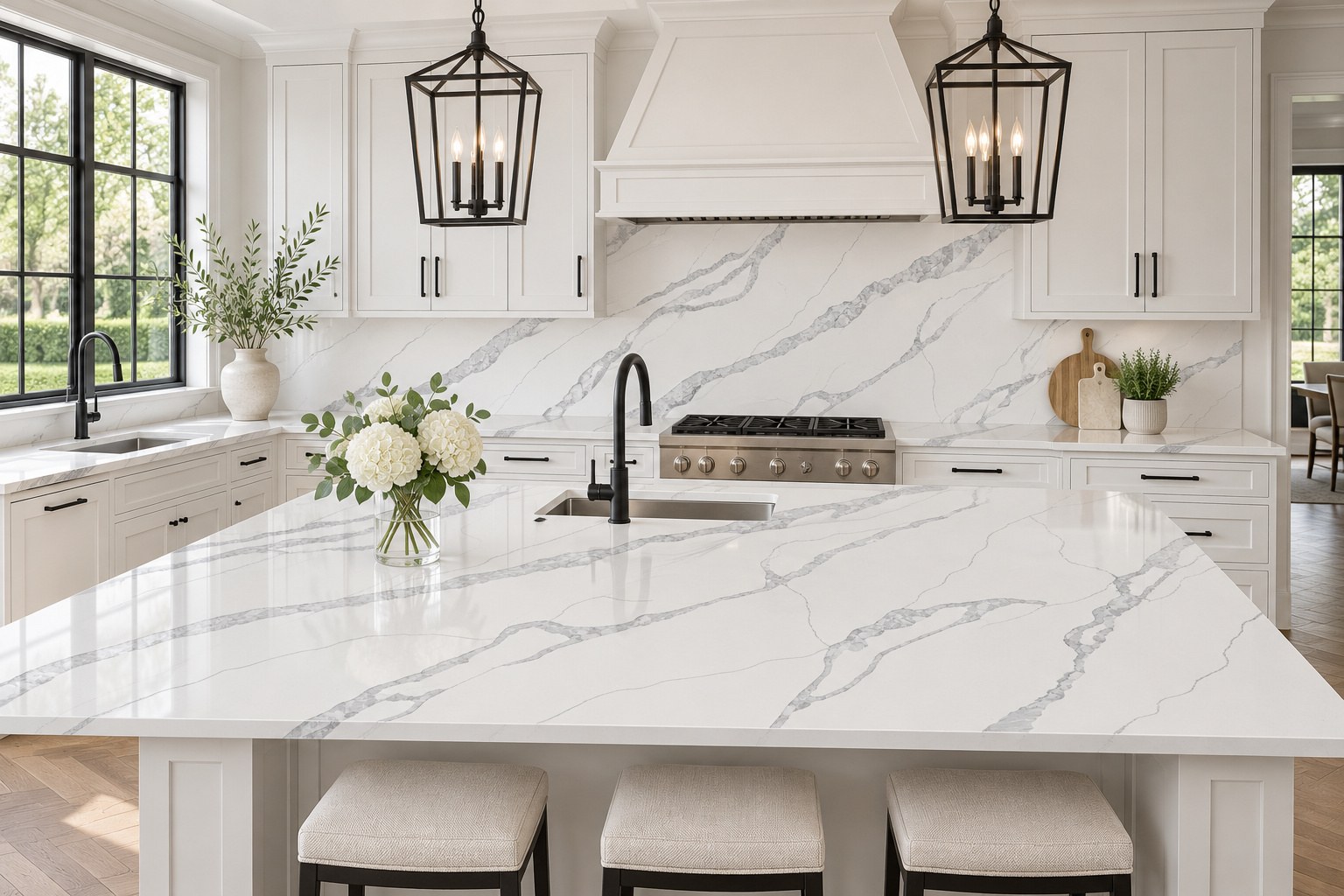
Quartz countertops are engineered. They are made from quartz minerals combined with binders and pigments. That manufacturing process makes it possible to offer repeatable colors and patterns, including designs inspired by marble. The finished surface is nonporous and does not need routine sealing.
Curious about how engineered quartz is made and fabricated safely? Read what Florida homeowners should know about engineered quartz and silica.
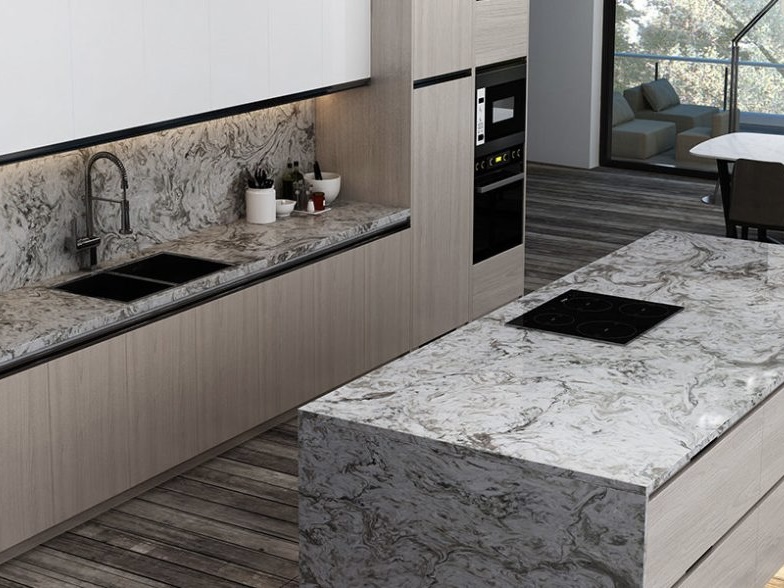
Granite is natural stone. Each slab formed in the earth has its own mineral pattern, color variation, and character. Granite is durable, but porosity and care needs can vary from one variety to another. Ask about the specific slab and whether the fabricator recommends sealing it.
Maintenance and everyday spills
Quartz is usually the simpler choice for routine care: wipe spills with a soft cloth, water, and mild soap, and follow the manufacturer’s instructions. Because it is nonporous, it does not require periodic sealing. Still, avoid harsh chemicals or abrasive pads unless the product’s care guide says they are safe.
Granite needs the same quick attention to spills, especially oils, wine, and acidic foods. Depending on the stone and finish, a sealer may be recommended to reduce absorption. Sealing does not make a countertop stain-proof, and there is no single schedule that fits every granite. Ask your fabricator how to test and maintain the slab you select.
To test your stone and plan a sealing routine, read our guide to stone porosity and seal schedules.
Indoor humidity in Miami is not, by itself, a deciding factor between these two countertop materials. For either surface, good installation, prompt spill cleanup, and the right care instructions matter more than the humidity outside.
Heat, cooking, and sunlight
Granite generally tolerates heat better than engineered quartz. Quartz contains resin, which can be damaged or discolored by extreme or sudden heat. Use trivets and hot pads on both materials: a very hot pan or appliance can cause thermal shock or damage a surface, even when the stone itself is heat-resistant.
Natural light is another Miami-specific consideration. If a counter will sit beside a sunny window, ask the brand about prolonged UV exposure. Many quartz surfaces are designed for indoor applications and may change color with long-term direct sunlight. Granite is often a more suitable option for outdoor kitchens, but confirm the exact stone, finish, and care requirements with your supplier and fabricator.
Appearance: consistent design or natural variation?
Quartz can be a good fit when you want a coordinated, repeatable look across an island and perimeter counters. Its colors and veining are manufactured, so the pattern is generally more controlled. Granite offers natural variation: mineral flecks, movement, and shifts in tone that make each slab distinct.
Photos and small samples cannot show every feature of a full slab. When you visit a showroom, look at the actual slab and consider where the strongest veins or color changes will fall around the sink, cooktop, and island. Your fabricator can also explain how seams and cutouts may affect the finished pattern.
Natural stone can also look different from one block to the next. Our article on why two slabs of the same stone can look different explains why it pays to see the full slab.
Cost and installation factors
There is no reliable rule that quartz always costs more than granite, or the other way around. The quote depends on the selected slab, thickness, availability, edge profile, number of cutouts, seams, transportation, and fabrication. A rare granite can cost more than a standard quartz color, while premium quartz designs can also carry a higher price.
Compare written, like-for-like estimates for the same countertop area and installation details. Ask what the price includes, whether the material is sold by the slab, and how much extra material your layout may require.
The edge profile also affects the final quote. See our countertop edge profiles guide to compare options before you ask for estimates.
Quartz vs granite: which is better for your Miami kitchen?
Quartz may be the better match if low maintenance, stain resistance, and a consistent design are your priorities. Granite may be the better fit if you love natural stone, want a unique slab, and value stronger heat tolerance. If your kitchen has strong direct sun—or connects to an outdoor cooking area—make exposure part of the product conversation before you buy.
Before deciding, compare the actual slabs, ask about care and warranty terms, and review the installation plan with your fabricator. Browse The Slab Depot’s natural and engineered stone selection, or use the showroom locator to plan a visit. The Miami showroom is at 7850 NW 98th St, Hialeah Gardens, FL 33016. You can also contact the team with questions about availability.
You can also browse quartz and granite options in our product catalog before your visit.
Frequently asked questions
Is quartz or granite better for a Miami kitchen?
Quartz is often the easier option to maintain indoors, while granite offers natural variation and better heat tolerance. The right choice depends on your cooking habits, design preference, sunlight exposure, and the specific slab.
Does Miami humidity damage quartz or granite countertops?
Normal indoor humidity is not usually the deciding issue for either material. Focus on spills, proper installation, and the care guidance for the exact surface. Direct sunlight is a more important exposure to discuss for many engineered quartz products.
Can I put a hot pan on quartz or granite?
Use a trivet on both. Granite generally handles heat better, but sudden temperature changes can still damage stone. The resin in engineered quartz can be affected by extreme heat.
Does granite need to be sealed?
It depends on the granite’s porosity and finish. Ask your fabricator whether your slab should be sealed and how to check when it needs attention. Quartz does not need routine sealing.
Product care resources
Care recommendations can vary by product and stone. For more detail, review the Natural Stone Institute’s natural stone care guide and your quartz brand’s maintenance instructions, such as Cosentino’s Silestone care guidance.